


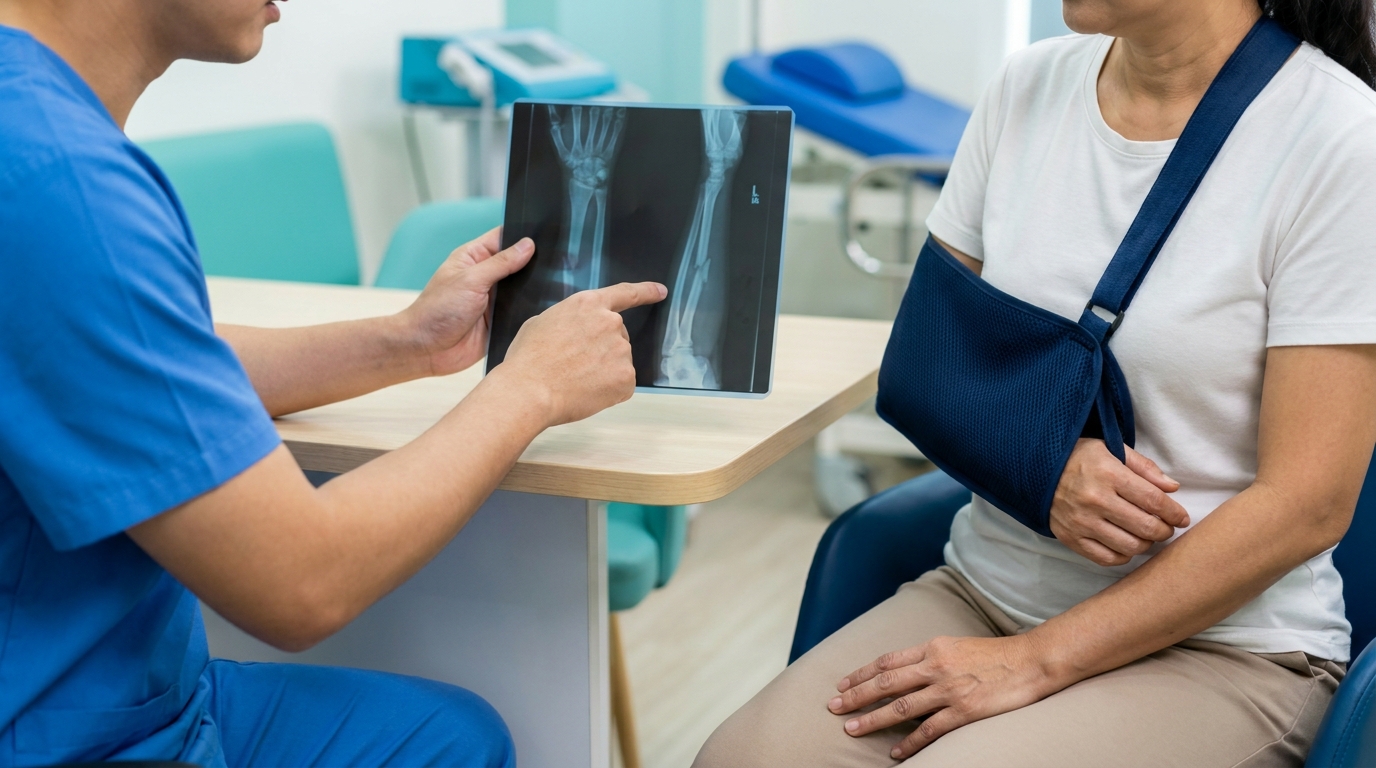
A fracture after a minor fall may be linked to osteoporosis because weakened bones can break under relatively low impact. A bone health assessment can help determine whether osteoporosis or another underlying issue contributed to the injury and identify ways to reduce the risk of future fractures.
Why a Minor Fall Sometimes Causes a Fracture
A fall from standing height may seem minor, but it can still cause a fracture when the bones have lost strength.
Osteoporosis gradually reduces bone density and often develops without obvious symptoms. For some people, the first sign is a fracture of the wrist, hip or spine.
A fracture caused by a minor fall or another low-impact event is known as a fragility fracture. It may happen after tripping at home, slipping in the bathroom or landing on an outstretched hand. A weakened bone in the spine may also fracture during an everyday movement such as bending or lifting.
Signs of a Fracture After a Fall
Pain after a fall does not always mean that a bone is broken. However, a fracture may be suspected when the pain is severe, movement is difficult or the symptoms do not improve.
Possible signs include:
- Persistent or worsening pain
- Swelling or significant bruising
- Difficulty walking, bearing weight or using the injured area
- A limb or joint that appears out of shape
- Sudden back pain after a fall, bending or lifting
Symptoms may not always be obvious immediately, especially in older adults. Being able to walk or move the injured area does not completely rule out a fracture.
Seek prompt medical attention if the person cannot stand or put weight on the injured area, if the limb looks out of shape, or if numbness or weakness develops. Do not force them to walk if a hip, leg or spinal fracture is suspected.
Does a Fracture After a Minor Fall Mean You Have Osteoporosis?
Not necessarily. A bone can still break after twisting, a direct impact or an awkward landing, even when bone strength is normal.
However, osteoporosis may be a concern when the fracture occurs after a low-impact incident or when the injury seems too minor to explain the break.
Further bone health checks may be recommended when the fracture:
- Occurred after a fall from standing height
- Followed a minor bump or everyday movement
- Affected the wrist, hip or spine
- Occurred in an older adult
- Followed an earlier low-impact fracture
The person’s age, medical history, fracture location and other risk factors will help determine if osteoporosis was linked to the fracture.
Should You Check Your Bone Health After a Fracture?
Not every fracture requires a bone health check. However, further testing may be recommended when a fracture follows a low-impact fall or the injury seems too minor to have caused a broken bone.
Osteoporosis is more likely in women after menopause, older men and people who have previously had a fragility fracture.
Risk may also be higher in people who have a low body weight, take corticosteroids for a long period, have a family history of osteoporosis or live with a medical condition that weakens the bones.
A bone health check can help determine if osteoporosis caused the fracture and if treatment is needed to reduce the risk of future fractures.
What Types of Fractures Are Commonly Linked to Osteoporosis?
Osteoporosis can affect bones throughout the body, but fragility fractures commonly involve the wrist, hip and spine.
Wrist Fractures
An osteoporotic wrist fracture often occurs when someone lands on an outstretched hand during a fall.
In an older adult, a wrist fracture after a simple fall may be an early sign of reduced bone strength.
Hip Fractures
Osteoporotic hip fractures commonly occur when someone falls directly onto the side of the hip.
They can have a significant effect on mobility and independence, particularly in older adults, and often require prompt treatment.
Spinal Compression Fractures
An osteoporotic spinal compression fracture occurs when one of the bones in the spine, known as a vertebra, collapses or flattens.
It may happen after a fall or an everyday movement such as bending or lifting. Symptoms may appear suddenly or develop gradually, sometimes causing back pain, loss of height, a more rounded upper back or difficulty standing upright.
Osteoporosis may also be linked to fractures of the shoulder, upper arm and pelvis.
How Are Fractures and Osteoporosis Diagnosed?
After a fracture from a minor fall, the doctor will first confirm the break and assess its severity. An X-ray is usually used, although a CT or MRI scan may be needed for certain spinal or complex fractures, or fractures that are not clearly seen on an X-ray.
If osteoporosis is suspected, a bone density scan may be arranged. The doctor will also consider the person’s age, previous fractures, medical history and other risk factors. Blood tests may be used to check for conditions that affect bone strength.
How Are Osteoporotic Fractures Treated?
Treatment for an osteoporotic fracture depends on the type and severity of the break. It may include pain relief, a cast or brace, rehabilitation or surgery.
If osteoporosis is diagnosed, treatment may also be recommended to strengthen the bones and reduce the risk of another fracture. Both the fracture and the underlying osteoporosis should be treated.
How to Reduce the Risk of Another Fracture
Not every fracture can be prevented, but improving bone strength and reducing the risk of falls can lower the chance of another injury.
Manage Osteoporosis
If osteoporosis is diagnosed, treatment may be recommended based on the person’s fracture risk, bone density and medical history.
Osteoporosis medication should be taken as prescribed and should not be stopped or changed without speaking to the doctor.
Support Bone and Muscle Strength
Adequate calcium and vitamin D support bone health, while protein helps maintain muscle strength.
Weight-bearing, resistance and balance exercises can help maintain bone strength, muscle strength and stability. After a fracture, exercise should follow the advice of a doctor or physiotherapist until the bone has healed sufficiently.
Reduce the Risk of Falls
Practical steps include:
- Removing loose rugs and clutter
- Keeping walkways well lit
- Using non-slip mats in wet areas
- Installing grab bars where needed
- Wearing stable, well-fitting footwear
- Having eyesight and medications reviewed when appropriate
Frequently Asked Questions
Can osteoporosis cause a fracture without a fall?
Yes. Weakened bones may fracture during everyday movements such as bending, lifting or coughing, especially in the spine.
Do osteoporotic fractures take longer to heal?
Not always. Healing depends on the type of fracture, the treatment provided and the person’s overall health.
Can men develop osteoporosis-related fractures?
Yes. Men can develop osteoporosis and fragility fractures, particularly with older age, long-term corticosteroid use or certain medical conditions.
Concerned About a Fracture After a Minor Fall?
A broken bone after a low-impact fall may also raise questions about bone strength, particularly in older adults and women after menopause.
Book an appointment for a fracture and bone health assessment with Pinnacle Orthopaedic Group in Singapore.

About Our Doctor
Dr Victor Seah
MBBS (Singapore), MMed (Singapore), MRCS (Ed), FRCS (Ed) (Orthopaedics)
Dr Victor Seah is a double-fellowship trained orthopaedic surgeon in Singapore who specialises in orthopaedic trauma, fractures in the elderly, and foot and ankle conditions. He treats complex bone and joint injuries, with a focus on accurate diagnosis and helping patients return to safe, functional movement.