


If you have been struggling with tendon, ligament, or joint pain, you have probably heard of Platelet-Rich Plasma (PRP) therapy. It is one of the most widely used biologic treatments in orthopaedics today, and for good reason.
PRP helps the body heal itself naturally by using your own blood to deliver powerful growth factors directly to injured tissues. It is safe, minimally invasive, and has been shown to help in conditions ranging from tennis elbow and rotator cuff injuries to knee osteoarthritis.
At Pinnacle Orthopaedic Group in Singapore, Platelet-Rich Plasma (PRP) therapy is part of our regenerative treatment options to support recovery and promote long-term musculoskeletal health.
Clinical Transparency & Regulatory Notice
Regarding Platelet-Rich Plasma (PRP) and Autologous Protein Solution (APS) Treatments:
The Ministry of Health (MOH) in Singapore has issued a consultation paper (Circular No. 56/2026) proposing potential modifications to licence conditions regarding the clinical provision and governance of orthopaedic biologic therapies, including PRP for low-grade knee osteoarthritis and APS.
Please note that these proposals are currently under administrative review and are not yet in final legal effect. Our practice is actively engaged in the formal consultation process to ensure that evidence-based, minimally invasive treatment options remain accessible to appropriate patients.
All treatments at our clinic are administered following a thorough individual clinical evaluation, detailed informed consent regarding current clinical evidence and uncertainties, and in strict adherence to established regulatory standards. We are committed to patient safety and transparent clinical communication.
If you have questions about how these evolving guidelines may apply to your specific condition, please schedule a consultation with our specialists. We will provide an update once MOH has given us a formal reply to our written representation to them.
What Is Platelet-Rich Plasma (PRP)?
PRP stands for Platelet-Rich Plasma.
Your blood contains platelets, which are tiny cells packed with growth factors, natural proteins that help repair damaged tissue and reduce inflammation.
Here’s how PRP works:
- A small amount of your blood is drawn, similar to a routine blood test.
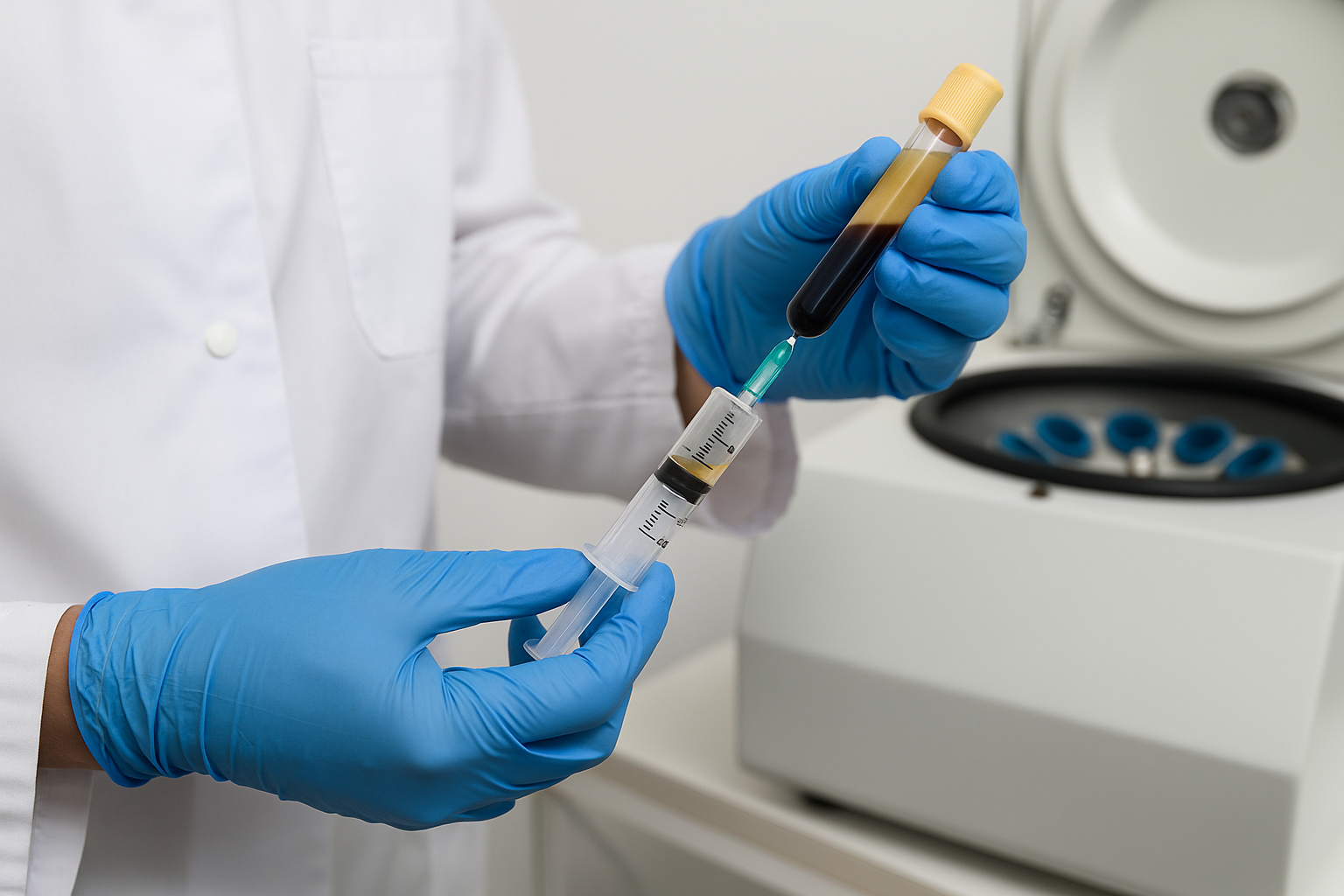
- The blood is placed in a sterile centrifuge, which spins it to separate and concentrate the platelets.
- This platelet-rich layer, your body’s natural healing serum, is then injected into the injured area.
The entire process takes about 30 to 45 minutes and is performed in the clinic without surgery or general anaesthesia.
How PRP Supports Healing and Recovery
When injected into an injured tendon, ligament, or joint, PRP releases growth factors that help to:
- Stimulate tissue repair
- Reduce inflammation
- Improve blood flow and collagen formation
- Support long-term healing rather than just masking symptoms
This makes PRP particularly useful for chronic injuries that have not fully healed with rest, physiotherapy, or medication.
Conditions Commonly Treated With This Therapy
PRP therapy is used in both outpatient settings and as an adjunct procedure in surgery to boost healing rates.
At our practice, we commonly use PRP to help patients with:
- Muscle tears – PRP is widely used in sports medicine to support recovery and reduce healing time.
- Tendon injuries – such as tennis elbow, golfer’s elbow, or Achilles tendinopathy.
- Ligament sprains – including mild knee or ankle ligament injuries.
- Rotator cuff and shoulder pain.
- Knee osteoarthritis – to reduce pain and stiffness and improve joint function.
- Post-surgical healing – sometimes used after procedures to promote recovery.
PRP is a versatile and well-studied treatment option in orthopaedics, with growing scientific support.
Is PRP Safe?
Yes. Because PRP is made from your own blood, it is completely natural and safe. There is no risk of allergy or disease transmission.
The most common side effect is mild soreness or swelling at the injection site for a day or two, which is a normal part of the healing response.
What Does the Evidence Say?
Over the past decade, numerous clinical studies have shown that PRP can:
- Reduce pain and improve function in knee osteoarthritis.
- Promote tendon and ligament healing
- Improve recovery and tissue quality in rotator cuff and muscle injuries.
While results can vary depending on the condition and individual response, PRP has become an important part of modern orthopaedic care, bridging the gap between conservative treatment and surgery.
Key Takeaways on PRP Therapy
Platelet-Rich Plasma (PRP) uses your own blood to deliver healing growth factors directly where they are most needed.
It is safe, natural, and supported by scientific evidence, helping many patients recover faster, reduce pain, and return to their active lifestyles.
To learn more about PRP injections, speak to our orthopaedic specialists at Pinnacle Orthopaedic Group in Singapore.
Quick Facts: PRP in Orthopaedics
| Topic | Details |
| What it is | A concentrated portion of your own blood rich in healing platelets and growth factors |
| How it’s done | Simple clinic procedure – blood draw, centrifugation, and targeted injection |
| Common uses | Tendon and ligament injuries, knee osteoarthritis, shoulder pain, post-surgery healing |
| Purpose | To promote natural tissue repair and reduce inflammation |
| Safety | Very safe – uses your own blood, minimal side effects |
| Recovery | Mild soreness for 1–7 days; normal activity can usually resume quickly |