


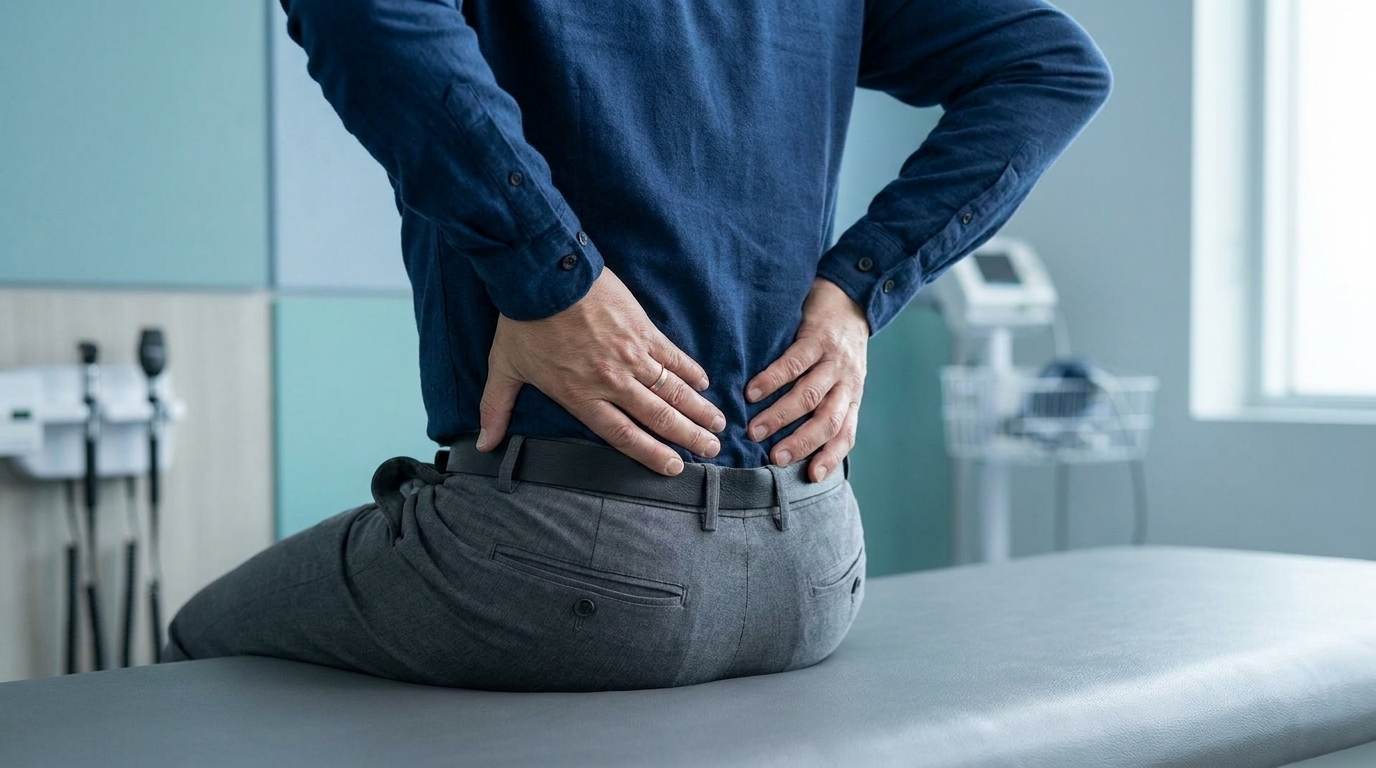
Lumbar spinal stenosis occurs when the spinal canal in the lower back narrows and places pressure on the spinal nerves. This can cause lower back pain, leg numbness, weakness, sciatica-like pain, or difficulty walking.
What Is Lumbar Spinal Stenosis?
Lumbar spinal stenosis refers to the narrowing of the spinal canal in the lower back, which puts pressure on the spinal nerves. This condition often causes lower back pain, numbness or leg discomfort, making it harder to walk or stay active. It is especially common among older adults and can significantly impact daily life if left untreated.
What Causes Lumbar Spine Stenosis?
The spinal column acts as a conduit for the nerves that control movement and allow for sensory perception. Age-related changes are the most common cause for the narrowing of the spinal canal which affect nerve transmission leading to a condition known as lumbar spinal stenosis.
Degeneration of the discs results in tears, bulges and herniations which compress nerves from the front
Arthritis of the facet joints and thickening of the ligamentum flavum result in constriction of the canal from the back
Occasionally, the degeneration leads to slips not just of the discs, but of the bone, known as Spondylolisthesis that can buckle the nerves within the canal
These factors all contribute to a circumferential reduction in space available for the nerves travelling within the canal.
Symptoms of Lumbar Spinal Stenosis
Patients with lumbar spinal stenosis may experience:
- Lower back pain may occur due to the arthritic changes of the spine
- Preferential compression within the canal may cause severe shooting pain which travels down the buttocks into the leg of the affected side. (commonly referred to as Sciatica)
- Vague dull aches within the lower limbs which worsen in relation to exertion. (commonly referred to as Claudication)
- Symptoms of weakness and numbness in the lower limbs may arise when nerves are severely restricted.
- On occasion, this can even lead to permanent loss of bladder and bowel control.
How Lumbar Spine Stenosis Is Diagnosed
Fractures, infection or even cancer can cause compression of the nerves within the spinal canal and mimic these same symptoms. Hence, proper evaluation of your condition is critical.
Dr Mark Tan BH will conduct the following:
- Thorough clinical and medical history
- Complete physical examination including the testing of individual nerves
Depending on the results of the interview and physical examination, Dr Mark Tan BH may require further tests to determine the cause of your pain.
- Radiographs
- CT Scans
- MRI Scans
- Nerve Conduction Studies
Conservative Treatment Options
Non-surgical treatment is typically the first-line in our treatment plan for patients with mild to moderate lumbar spinal stenosis. This includes medications such as oral painkillers and referrals to a Physiotherapist to alleviate your pain.
On occasion, epidural steroid injections and radiofrequency ablation techniques may be utilized to facilitate physiotherapy and expedite early return to function.
Minimally Invasive Surgery
Surgical treatment may be recommended when there is:
- Severe compression of the nerves within the spinal canal
- Failure of conservative management
- Intractable pain despite oral medication
- Development of neurological symptoms
In such cases, it is Dr Mark Tan BH’s preference to utilize Minimally-Invasive techniques to alleviate the compression of your nerves (Spinal Decompression), if necessary, fixation of the vertebrae may be required (Spinal Fusion) to maintain stability.
The type of surgery must be and will be tailored according to your specific condition.
These are routine and simple surgeries with extremely high success rates of pain relief.
When to Seek Help for Lumbar Spinal Stenosis in Singapore
Don’t ignore persistent lower back pain, numbness or difficulty walking, as these may be signs of lumbar spinal stenosis. Early assessment and treatment can prevent long-term nerve damage and improve your mobility.
If you’re noticing these symptoms, consult Dr Mark Tan BH for a detailed evaluation and a treatment plan tailored to your condition. This may involve physiotherapy, minimally invasive surgery or other options to relieve nerve pressure and restore function.

Dr Mark Tan
Senior Consultant Orthopaedic and Spine Surgeon in Singapore
MBBS(Singapore), MMED(Orthopaedics, Singapore), MRCS (Edinburgh), FRCS (Edinburgh)
Dr Mark Tan is an orthopaedic surgeon in Singapore who specialises in spine surgery. He manages a wide range of spinal conditions, including degenerative, traumatic, and complex deformity cases, with a focus on minimally invasive, motion-preserving, and advanced spine procedures to support functional recovery.
Looking For A Reliable Back Orthopaedic Specialist?
Fast Medical Attention, Transparent Fees
Make an appointment for comprehensive care for your back problems!