


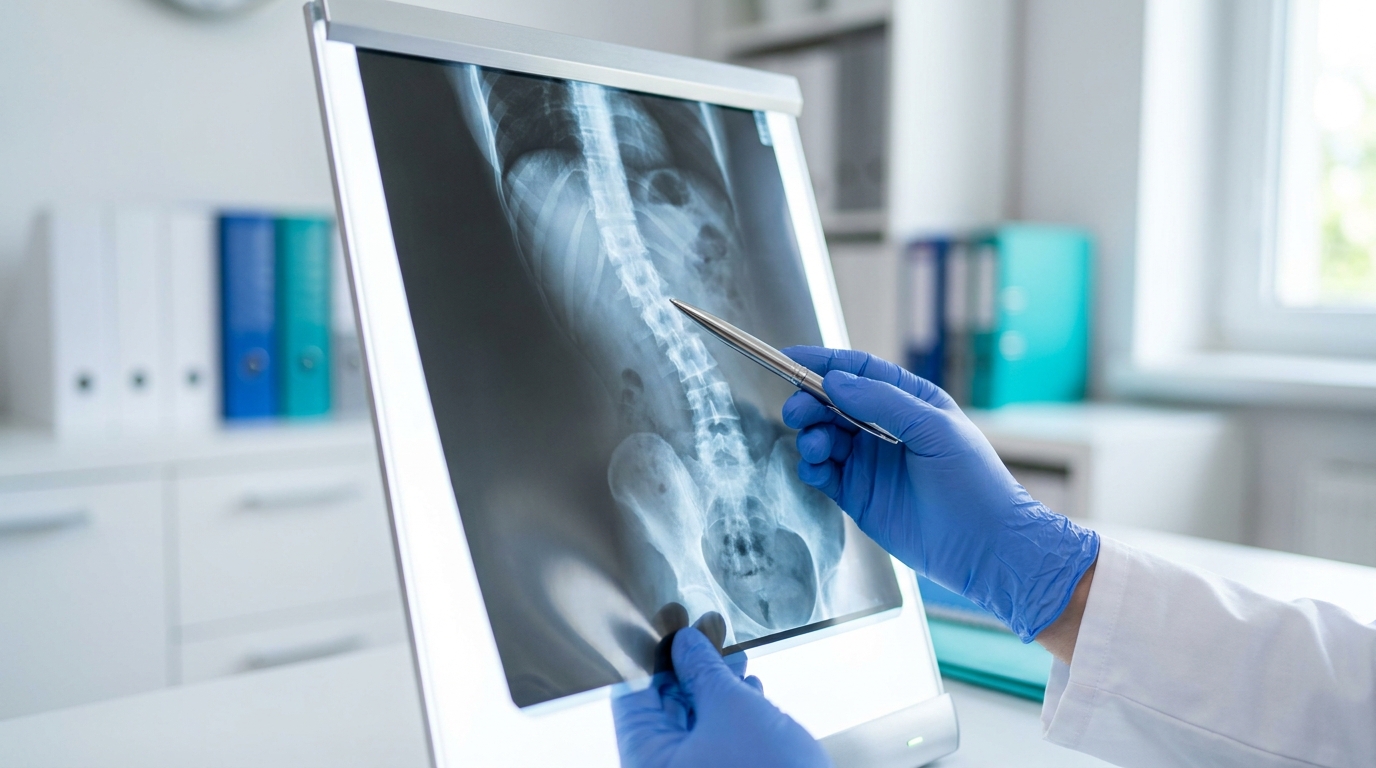
Scoliosis is one of the common spinal deformities, involving an abnormal curvature of the spine. It can affect people of all ages in Singapore and may lead to posture changes, back pain, or reduced mobility if left untreated.
What is scoliosis?
Scoliosis refers to an abnormal curvature of the spine. This is clinically defined as a coronal curve more than 10 degrees on radiograph. However, this medical definition is just the tip of the iceberg, the deformity is actually a three-dimensional problem. Abnormal rotation of the vertebrae in the axial plane can result in prominent bony and muscle humps on one side of the back. Further loss of the normal sagittal alignment can result in a stooped (kyphotic) posture.
This condition often affects the elderly as age-related changes of the spine result in uneven loading and arthritic changes, thus altering the overall balance of the spine. It may also be part of a continuum in unrecognized adolescent idiopathic scoliosis which progresses when further degradation of the spine occurs.
Common Symptoms of Scoliosis
Patients with scoliosis may experience a combination of pain, postural changes, and nerve-related symptoms, such as:
- Back Pain: Initially, this may be related to the arthritic changes of the spine. However, as the curve progresses, the musculature decompensates, worsening the discomfort that the patient experiences.
- Deformities: Loss of the overall alignment results in a host of posture abnormalities. There may be malalignment of the hips and shoulders. Prominent muscular and bony humps may appear on one side of the back. Patients may also develop a hunch-back appearance.
- Limitation in Range of Motion: The flexibility of the spine may be reduced.
- Sciatica-like Pain: Preferential compression within the canal may cause severe shooting pain which travels down the buttocks into the leg of the affected side.
- Claudication: Vague dull aches within the lower limbs which worsen in relation to exertion.
- Neurological Symptoms: Weakness and numbness in the lower limbs may arise when nerves are severely restricted.
How Scoliosis is Diagnosed
Diagnosing scoliosis involves a combination of physical assessment and imaging studies.
Dr Mark Tan BH will conduct the following:
- Thorough clinical and medical history
- Complete physical examination including the testing of individual nerves
Depending on the results of the interview and physical examination, Dr Mark Tan BH may require further tests to determine the cause of your pain.
- Radiographs
- CT Scans
- MRI Scans
Conservative Scoliosis Treatment Options
Non-surgical management is typically the first-line in the treatment plan for patients with compensated deformities. This includes:
- Oral painkillers
- Referrals to a physiotherapist to alleviate discomfort and improve spinal alignment
On occasion, epidural steroid injections and radiofrequency ablation techniques may be utilised to facilitate physiotherapy and expedite early return to function.
Surgical Treatment Options for Scoliosis
Surgical intervention may be recommended in the following scenarios:
- Severe compression of the nerves within the spinal canal
- Failure of conservative management
- Intractable pain despite oral medication
- Development of neurological symptoms
In such cases, Dr Mark Tan BH will tailor the surgical plan according to the patient’s specific condition and requirements. Surgical options may include:
- Minimally-Invasive Decompression Techniques: To alleviate nerve compression
- Limited Spinal Fusions: Joining the vertebral bones within short segments of the spine to provide stability and prevent further progression of the deformity in that segment
- Extended Spinal Fusions: Joining vertebral bones of long segments of the spine to correct overall deformity and restore balance
Moving Forward with Scoliosis Treatment in Singapore
For those experiencing symptoms of scoliosis or spinal deformities, a clinical evaluation can help clarify the next steps.
Dr Mark Tan BH offers comprehensive scoliosis assessments and personalised treatment planning.

Dr Mark Tan
Senior Consultant Orthopaedic and Spine Surgeon in Singapore
MBBS(Singapore), MMED(Orthopaedics, Singapore), MRCS (Edinburgh), FRCS (Edinburgh)
Dr Mark Tan is an orthopaedic surgeon in Singapore who specialises in spine surgery. He manages a wide range of spinal conditions, including degenerative, traumatic, and complex deformity cases, with a focus on minimally invasive, motion-preserving, and advanced spine procedures to support functional recovery.
Looking For A Reliable Back Orthopaedic Specialist?
Fast Medical Attention, Transparent Fees
Make an appointment for comprehensive care for your back problems!